
Casting Off Darkness, Putting On Light

A Sermon for the First Sunday of Advent, by Abbot Kenneth Gillespie

May the grace of our Lord Jesus Christ, and the love of God, and the fellowship of the Holy Spirit be with you all.

Today is the beginning of my favorite season of the Church year, Advent. In our Collect this morning, we prayed for grace “to cast away the works of darkness, and put on the armor of light.” These two movements, casting off and putting on, frame not only this day’s worship but the entire Advent season. This is our work for the next four weeks: to remove what hinders us and to clothe ourselves in Christ’s light as we prepare for His coming.

We were reminded, in our Gospel lesson, that our Lord is indeed returning and were encouraged to keep watch and be ready. That is what this Advent season is really all about, purposefully waiting for Christ. In the next few verses following our reading from the Holy Gospel this morning, our Lord tells us that if a master of a house knows in what part of the night a thief is coming, then he would of course stay away and deter the break-in. Is that not something we could all relate to, the desire to protect and preserve our property, our belongings, our money. Would we not also be willing to do as he says, to stay awake, to stand watch in order to preserve what is ours. How much more so then, should we be willing to stand watch to preserve our souls, to be found ready at the return of Christ.

Saint Paul tells the Romans that the night is far gone, the day is at hand. It is time to cast off the works of darkness and put on the armor of light, the very words of our Collect today. To make no provision for the flesh, to gratify its desires. This putting on of armor is an intentional, daily action, not a one-time decision but a constant choosing to live vigilantly, prepared for our Lord’s return.

Advent is, for us, a time of preparation and self-examination. It is a season of fasting, of deep spiritual consideration, of purposeful waiting. This season is the start of a new liturgical year. The Church has always called us to order our lives around certain themes and events from God’s story of redemption. For over fifteen hundred years, the Church has observed Advent as a season of preparation, a time set apart to ready ourselves. Each year, we have the opportunity to cultivate a greater understanding of these truths, to develop a deeper conviction about what they mean to us, and a more intentional commitment to Christ as our Lord.

During this season of Advent, we focus on the threefold coming of Christ: His coming in the Incarnation at Bethlehem, His present coming to us now in Word and Sacrament, and His promised return in glory. We reflect on what His first coming has meant in our lives as believers and what we need to do to prepare for His promised return. This is our new year, and it too is a time for us to make certain resolutions.

If you are wondering what it might look like to devotionally focus on Advent this year, take a look around you, at what is going on in our world today, at what this season has become, and then do the exact opposite. The enemy is clever and is constantly seeking to deceive and disorient us. The world, the flesh, and the devil work in concert to draw us away from God, and what has happened in our Western culture around this season is a perfect example of that spiritual assault.

The enemy is more subtle than to merely rob us of Christmas, that would provoke resistance. Instead, Christmas has been extended backward through all of Advent, turning a season of fasting into six weeks of feasting. We’ve not lost the celebration; we’ve lost the preparation, and in losing the preparation, we’ve lost the meaning of what we celebrate. What our culture has lost is not merely a liturgical season, but the very concept of sacred time, of ordering our lives according to God’s redemptive calendar rather than commercial imperatives.

No longer is this a season of fasting and preparation of one’s soul, but now it is a season of gluttony and materialism. We certainly worship, but what is being worshiped? This culture reflects the corrupting influence of the world, the flesh, and the devil working to deceive us, and the result of this deception is that the darkness has crept in, hope is diminished.

There is a lot of talk in Holy Scripture about light versus darkness, even in our lessons appointed for today we are told to put on the armor of light. You may have heard this from me before, but I think it is worth repeating. Darkness is not the opposite of light; it is not an opposing force that the light must overpower. This reflects what the Fathers taught us about evil itself, that it is not a competing power against God, but rather an absence of good. Similarly, darkness is the absence of light, and light, even the smallest bit, dispels the darkness. As St. John wrote, “The light shines in the darkness, and the darkness has not overcome it.”

This first week of Advent we are called to focus on hope, on hope in the sure coming of Christ. It is the absence of hope that leads to despair, a spiritual sickness that comes when hope in God’s promises has grown dim. As St. Paul teaches, “we sorrow, but not as those without hope.” The world’s despair comes precisely from having no hope beyond this passing age, beyond their current circumstances. We have many labels for despair’s symptoms and there are many manifestations of it: suicide, alcoholism, drug abuse, depression, anxiety. All are rooted in despair, in the absence of hope. Just as light dispels the darkness, so too does hope dispel the despair we face.

This season we are called to purposeful anticipation of Christ, to ready ourselves. Let us at least put as much effort into that as we put into strategically mapping out our Black Friday shopping plan or our holiday feast menu, or our Christmas list. Consider what happens around our country every year during this season. Adults fighting in stores over consumer goods, camping overnight in lines, sacrificing Thanksgiving fellowship for shopping strategy, sacrificing their dignity, their decency, for things. What intense devotion and faith they had. What discipline and motivation. If only we could have such devotion to our Lord, think how much better our lives might be.

Instead, most in our society can’t find the motivation to show up for an hour-long worship service each week. I am not even talking about the practices that used to be normal for the Church, like all-night prayer vigils, forty-day Advent fasts, and sustained spiritual disciplines. St. John Chrysostom preached, “Let us not sleep as others do, but let us keep awake and be sober.” Yet most churches don’t even speak of such things anymore. Make no mistake, our culture is deceived, shaped by forces hostile to the Gospel, and my encouragement to you today is that we each take a good hard look at our lives and what motivates us.

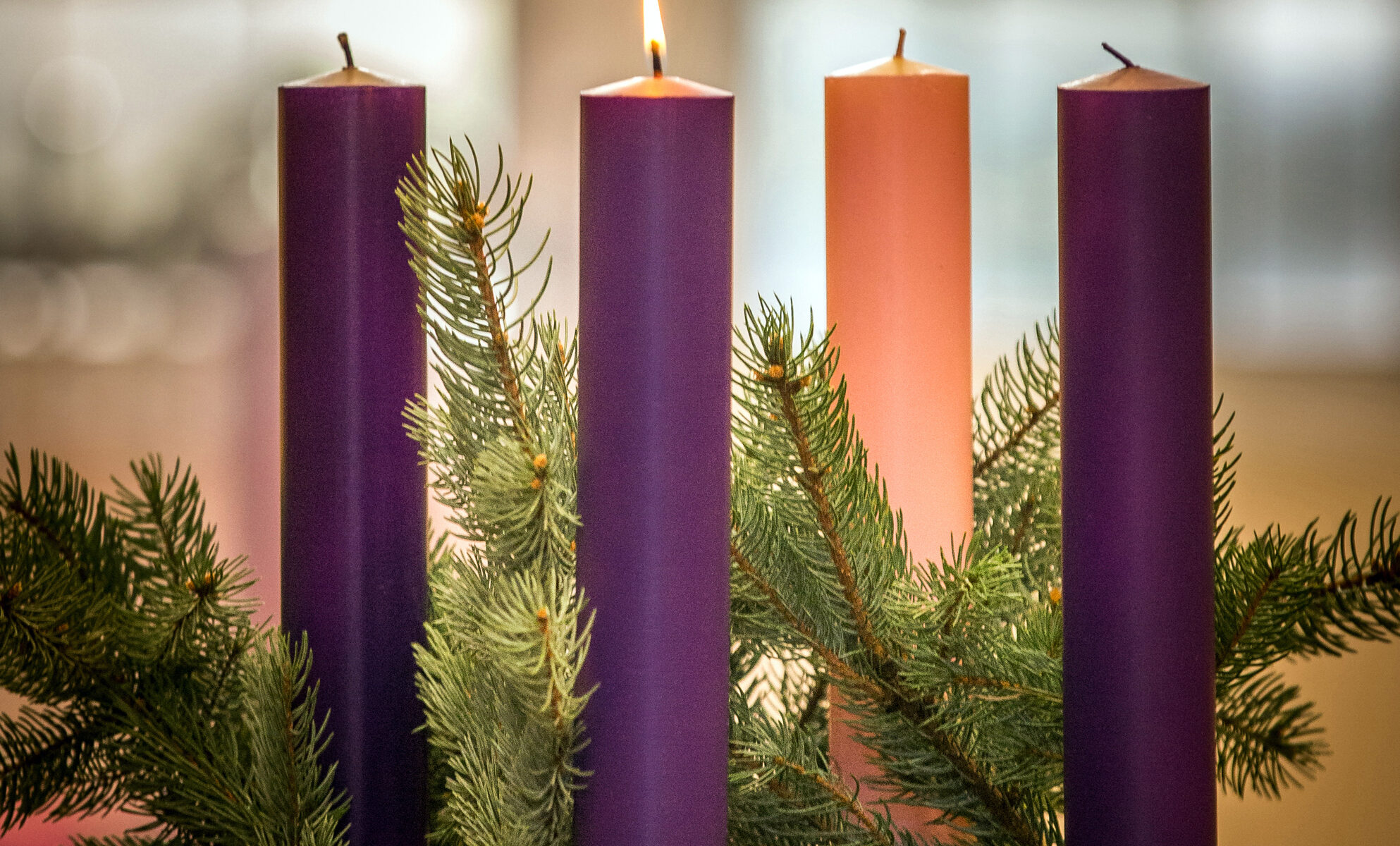
Let us take the time to consider what it might look like if we were to put on the armor of light this Advent. Imagine evening prayer by candlelight as darkness falls earlier each day, reading Isaiah’s prophecies aloud as a family, allowing the ancient words to kindle expectation in our hearts. Imagine acts of compassion and mercy toward the poor, living out Isaiah’s vision of beating swords into plowshares, choosing peace over conflict, generosity over accumulation. Imagine the beauty of anticipation itself, not the anxious anticipation of whether packages will arrive on time, but the joyful longing for Christ that makes the heart grow in affection. Imagine waking each morning and deliberately choosing to put on the armor of light, to prayerfully clothe ourselves in Christ, as St. Paul says, rather than being dressed by the culture’s expectations.

This season of Advent is meant to be such a time of examination. I encourage you all to fast this season, to do the opposite of what our culture tells you is normal. Fasting is not mere asceticism for its own sake. As St. Basil the Great teaches, fasting is the mother of prayer, the guardian of the soul, and the companion of sobriety. When we voluntarily limit bodily comfort, we create space for spiritual hunger, hunger for God alone. We learn for ourselves what our Lord demonstrated that man does not live by bread alone, but by every word that proceeds from the mouth of God.

That does not mean you have to go home and take down your Christmas trees and not attend any Christmas parties, which ridiculously don’t even occur during Christmas. I am not asking you to do anything that severe or difficult. Instead, rather than feasting every day for the next four weeks, just so you can go on a diet in January, eat simply, limit how much you eat, avoid over-indulging. Save the Christmas cookies and the peppermint mochas for Christmas Day and the twelve days of Christmastide. I know it will not be easy, but it may just be rewarding. The feast is always better after a good fast. Take advantage of this Advent season, it is a beautiful and wonderful opportunity.

This is not the end of our year; this is the start of it. This is your opportunity to begin a new year with Christ as the foundation, as the focus of your devotion and motivation. This is a time to put on the armor of light. That is an intentional action, a choice we make each and every day. Remember, light dispels the darkness just as hope dispels despair. This is a season of hopeful anticipation. A time to make ourselves ready, to bring our lives into greater alignment with Christ.

So, as we prepare for Christmas, may we also remember that Christ has already come in humility at Bethlehem and we await His coming in glory at the end of the age. But even now, He comes to us, in Word and Sacrament, in the faces of the poor, and in the fellowship of His Body, the Church. To prepare for His final coming is to welcome His present coming in all these sacred ways. As St. Athanasius taught, “He became what we are that He might make us what He is.” He is coming—are we ready?

Do not miss this opportunity to do as Saint Paul instructed us, to cast off the works of darkness, to not gratify the desires of the flesh. Take advantage of this chance to make resolutions that truly matter, not trendy promises that look good on social media but real and substantive commitments that cultivate the Lordship of Christ in our lives. We have a tremendous capacity for self-delusion, to lie to ourselves, especially about ourselves. So, these next few weeks, may we each examine our lives and ask God the Holy Spirit to reveal to us those works of darkness, so that we may indeed cast them off.

Look for ways where you have lost sight of hope, where the despair has crept in and allow God to flood those areas with His light, His hope. Put on the armor of light, that we might truly be light bearers to this world lost in suffering and despair. God loves you. HE LOVES YOU: enough that He sent His Son for us, that Christ willingly suffered and died for us. We must not lose sight of that reality, and we must remember the power that this message carries to those suffering around us. St. Augustine said that hope has two beautiful daughters: Anger and Courage, anger at the way things are, and courage to see that they do not remain as they are. It is to a despairing world that we are called to bear His light, His hope.

Surely the Lord is coming soon—are we ready?

Let us pray:

Gracious Lord, You have told us You will return and that we are to make ourselves ready. Give us the grace to cast away the works of darkness and to put on the armor of light. Help us to focus on You through the distractions of this world, to never lose sight of You, and not lose hope in Your return. Give us the grace this season of a holy and blessed Advent, that we might, with the help of Your Holy Spirit, examine ourselves and draw ever closer to You. We ask this in Your name, Lord Jesus, who lives and reigns with the Father and the Holy Spirit, one God, now and evermore. Amen.

The Anglican Approach to Formation

By Abbot Kenneth Gillespie

But here someone perhaps will ask, since the canon of Scripture is complete, and sufficient of itself for everything, and more than sufficient, what need is there to join with it the authority of the Church’s interpretation? For this reason, – because, owing to the depth of Holy Scripture, all do not accept it in one and the same sense, but one understands its words in one way, another in another; so that it seems to be capable of as many interpretations as there are interpreters…Therefore, it is very necessary, on account of so great intricacies of such various error, that the rule for the right understanding of the prophets and apostles should be framed in accordance with the standard of ecclesiastical and catholic interpretation.[i]

– Saint Vincent of Lérins

These words of Saint Vincent ring ever true today as we consider the splintered nature of Christianity. The church has been carved into more than thirty-three thousand splintered groups,[ii] each representing their own perspective on the correct understanding, interpretation, and application of Holy Scripture. The Anglican spiritual tradition (not “denomination”) is the inheritor of an approach to formation congruent with the wisdom of Saint Vincent, which in our contemporary context, is often disregarded.  

Holy Scripture is most respected and held in highest regard when it is received in proper context, through the lens of the apostolic tradition. Christians, in the Anglican tradition, are not baptized to be independent agents, but rather as members of the one, holy, catholic, and apostolic Church, the body of Christ. As such, our formation, as we seek to mature and to be agents of maturity, occurs entirely within that context.

Effective practice of Christian faith occurs within the context of the Church, or as Saint Athanasius puts it, “the very tradition, teaching, and faith of the catholic Church from the very beginning, which the Logos gave, the Apostles preached, the Fathers and Ecumenical Councils preserved. Upon this tradition the Church is founded.”[iii] It was this tradition that guided the English reformation, and it is this tradition that continues to serve as the foundation of formation within the Anglican tradition.

Anglicans are a people under authority, and it is this authority by which we are formed. Holy Scripture – authoritatively supreme – together with apostolic tradition, the episcopacy, and the Anglican formularies all form the foundation of authority by which Anglicans are guided. Intentional formation in light of authority, properly understood, is essential to navigating the ecclesial, theological, and ethical challenges facing the church today.

St. Paul encourages the Church at Thessalonica to hold fast to the traditions that they had been taught, either by word or epistle.[iv] This advice holds as true for the church today as it did for the Thessalonians two-thousand years ago. St. Irenaeus affirms Holy Scripture as the “ground and pillar of our faith”[v] and clearly uses apostolic tradition[vi] as a means of guarding right interpretation of scripture and establishment of right doctrine against heresy. This has been further reinforced within a distinctively Anglican context when, during the 1948 Lambeth Conference, the following statement was issued by the bishops of the Communion:

Authority, as inherited by the Anglican Communion from the undivided Church of the early centuries of the Christian era, is single in that it is derived from a single Divine source, and reflects within itself the richness and historicity of the divine Revelation….. It is distributed among Scripture, Tradition, Creeds, the Ministry of the Word and Sacraments, the witness of saints, and the consensus fidelium….. It is thus a dispersed rather than a centralized authority having many elements which combine, interact with, and check each other; these elements together contributing by a process of mutual support, mutual checking, and redressing of errors or exaggerations to the many-sided fullness of the authority which Christ has committed to His Church. Where this authority is to be found mediated not in one mode but in several, we recognize in this multiplicity God’s loving provision against the temptations to tyranny and the dangers of unchecked power.[vii]

The goal and intent of the English Reformation was not to separate from the faith once delivered[viii] but to hold true to the faith and practice of the apostolic church. One need not read too deeply the English reformers to discover their desire to see the doctrine and practice of faith within the realm of England be based first and foremost on Holy Scripture and remain entirely congruent with the faith and practice of the apostolic fathers and the primitive church. Further, the clear intent of the English monarchy, following King Henry VIII, through the centuries has been clearly to retain the independent catholicity of the English Church.

Throughout his Apology, or Answer, in Defense of the Church of England, Bishop John Jewell clearly relied upon apostolic tradition to define right doctrine and practice of faith and clearly reinforces the intent of the English reformation to return to the teaching of the Apostles and fathers of the church.[ix] From a perspective of formation this has far reaching practical consequences for the church that should continue to guide contemporary formation.

In 1571, the bishops of the Church of England met in convocation and produced a series of Canons which included the following instruction to preachers  “… chiefly they shall take heede, that they teach nothing in their preaching, which they would have the people religiously to observe, and believe, but that which is agreeable to the doctrine of the olde Testament, or the newe, and that which the catholike fathers, and ancient Bishops have gathered out of that doctrine.”[x] Imagine how such guidance, rightly followed, might impact the church today.

The Anglican intent to recover and return to the faith and practice of the apostolic church remains true today. The theological statement provided by the Anglican Church in North America culminates in a quote from the ninety-ninth Archbishop of Canterbury, The Most Reverend Geoffrey Fisher, which echoes the sentiment of Anglican Bishops throughout the centuries: “The Anglican Communion has no peculiar thought, practice, creed or confession of its own. It has only the Catholic Faith of the ancient Catholic Church, as preserved in the Catholic Creeds and maintained in the Catholic and Apostolic constitution of Christ’s Church from the beginning.”[xi] This perspective clearly recognizes that authority for formation of right belief and practice lies on the proper foundation of Holy Scripture as it has been rightly received and understood by the apostolic church.

Approaching authority for formation in such a manner retains the alignment of the Anglican tradition with the apostolic and primitive church and most clearly establishes a path forward on many of the divisive issues facing the communion today. In his homily on Second Thessalonians, Saint John Chrysostom expressed an understanding of Saint Paul’s instruction to the Thessalonians to “stand fast and hold to the tradition of the Church,” as clearly recognizing apostolic authority inherent to tradition, and understanding the right relationship of tradition to Holy Scripture.[xii] As we engage in formation of belief and practice through our Anglican way of maintaining the Apostles’ teaching and fellowship, the breaking of bread and the prayers, this model not only retains an appropriately high view of apostolic teaching, but arguably, the highest view of Holy Scripture.

In the contemporary context, where terms are often applied loosely, and as such take on an ambiguity which dilutes their usefulness to the point of futility, it becomes necessary to first affirm an understanding of the term catholic in such a way that not only captures the universality implied in its use, but also the distinctive nature of the term as well. Saint Vincent provides what is probably the most widely accepted and most useful definition of the term:

Moreover, in the catholic Church itself, all possible care must be taken, that we hold that faith which has been believed everywhere, always, by all. For that is truly and in the strictest sense “catholic,” which, as the name itself and the reason of the thing declare, comprehends all universally. This rule we shall observe if we follow universality, antiquity, consent. We shall follow universality if we confess that one faith to be true, which the whole Church throughout the world confesses; antiquity, if we in no wise depart from those interpretations which it is manifest were notoriously held by our holy ancestors and fathers; consent, in like manner, if in antiquity itself we adhere to the consentient definitions and determinations of all, or at the least of almost all priests and doctors.[xiii]

St. Vincent’s definition, focusing on universality, antiquity, and consent, provides a timeless framework for not only understanding the term ‘catholic’ but also all that the term itself represents. This understanding is of paramount and utmost importance to proper formation within the Anglican context as it rightly establishes the complimentary relationship between Holy Scripture and tradition, both, as essential to catholic formation; if not also pointing back to the Holy Spirit’s establishment of the conciliar nature of the church’s apostolic tradition.

Any view of formation not grounded in Holy Scripture, as it has been received, interpreted, and applied throughout the traditions of the conciliar church, is in danger of placing individualistic reason, personal convictions, and private interpretation, at the center, rather than Christ, His Apostles, and the traditions of which Saint Paul speaks. Each individual, communion, or denomination interprets Holy Scripture according to their own tradition[xiv], even if that be a tradition of one.

The faith delivered through the apostles and preserved in the church[xv] is what allows the faithful, whether they be from the primitive or contemporary church, to resist the myriad of opinions and persuasions which deviate from the truth, and to truly remain a faithful man of God.[xvi] Faith, as it is has been received, guarded, and passed down by the church catholic, is one of the greatest gifts the Anglican tradition has to offer, i.e., a truly Apostolic foundation for formation.

Without this solid foundation individual believers are left to the authority of their personal readings and convictions, or those of other individuals, resulting in the thousands of interpretations and confessions of what is presumed to be the true faith, which is nothing less than the application of individualistic relativism as the authoritative hermeneutical principle. Yet the Apostle Peter wrote, “First of all you must understand this, that no prophecy of scripture is a matter of one’s own interpretation.”[xvii]

Most familiar with the Anglican theological tradition will be expecting some mention of human reason to accompany Holy Scripture and tradition in order to more completely represent the Hookerian triad. Human reason is in fact significant to the process of spiritual formation, but less so as a source of authority to guide formation, and more as a means by which formation occurs.

The ascendency of individualistic relativism over the church’s historical interpretation of Holy Scripture is culpable for much of the splintering and sectarianism, both within Christianity as a whole, as well as within the Anglican Communion distinctively. Richard Hooker, who sought to address this sectarian entropy, understood that the divine character of Holy Scripture can only be discerned by reason,[xviii] therefore, Holy Scripture is not self-authenticating or self-interpreting.

Human reason however, in and of itself, is insufficient and often prone to an expression of individualism incompatible with the apostolic faith. Therefore, reason, in order to properly discern the nature of Holy Scripture must first be informed and transformed by Holy Scripture and catholic tradition, and inspired by God the Holy Spirit. And so, the three sources of authority as outlined by Hooker – Holy Scripture, inspired reason, and catholic tradition – are intrinsically linked, inseparable without destroying both the collective and idiosyncratic integrities.

Reason, with respect to its’ inherit nature, is not a means of formation, but rather a means of discerning God in Holy Scripture and catholic tradition, the revelation of which is consequently formative. A succession of rationalizations and spirit of individualism have benumbed the church to the enfeeblement of tradition. No longer seen as efficacious in extrapolating contemporary pursuance of Holy Scripture, apostolic tradition often goes unheeded.

Contemporary Anglicans must preserve a commitment to formation that is congruent with that of catholic Christianity – which is classical Anglicanism. Consider the charge presented in the exhortation of those seeking ordination to the priesthood:

Therefore, consider the purpose of your ministry to the children of God. Work diligently, with your whole heart, to bring those in your care into the unity of the faith and of the knowledge of God, and to maturity in Christ, that there may be among you neither error in religion nor immorality in life. Finally, equip and lead your Congregation to proclaim tirelessly the Gospel of Jesus Christ.[xix]

It is only by retaining a true and proper understanding of Holy Scripture as it has been received, understood, and applied by the church catholic, that any may hope to fulfill such a grave undertaking. The two together, Holy Scripture and catholic tradition, as they are understood by human reasoning first shaped by these two and inspired by God the Holy Spirt, form the backbone of what it means to be an Anglican Christian, and right formation, properly grounded, is the best answer to navigating the myriad of challenges facing the church today.


[i] Saint Vincent of Lérins. Commonitory: 2:5. www.newadvent.org/fathers/3506.htm

[ii] David B. Barrett and George T. Kurian and Todd M. Johnson, World Christian Encyclopedia, 2nd Edition, (Oxford: Oxford Univ Press, 2001), 10.

[iii] St. Athanasius, First Letter to Serapion. www.sjotctx.org/pdf/YBL14.pdf?1

[iv] 2 Thessalonians 2:15.

[v] Saint Irenaeus, Against Heresies: 3.1. http://www.newadvent.org/fathers/0103103.htm

[vi] Ibid. 3.2

[vii] The Lambeth Conference, 1948:The Encyclical Letter from the Bishops, Together with Resolutions and Reports, (London: S.P.C.K., 1948), 84.

[viii] Jude 1:3.

[ix] Jewel, John, The Apology of the Church of England, (London, Paris, New York and Melbourne: Cassell, 1888), https:// anglicanhistory.org/jewel/apology/

[x] Collins, William. The Canons of 1571 in English and Latin: With Notes in English and Latin. (London: The Society for Promoting Christian Knowledge, 1899), 76.

[xi] Theological Statement. Anglican Church of North America. http://www.anglicanchurch.net/index.php/main/Theology/

[xii] Saint John Chrysostom, Homilies on Second Thessalonians. http://www.newadvent.org/fathers/23054.htm.  “Hence it is manifest, that they did not deliver all things by Epistle, but many things also unwritten, and in like manner both the one and the other are worthy of credit. Therefore let us think the tradition of the Church also worthy of credit. It is a tradition, seek no further.” 

[xiii] St. Vincent, 2.6.

[xiv] James B. Torrance, “Authority, Scripture and Tradition,” The Evangelical Quarterly 59.3 (July-Sept. 1987): 247.

[xv]Saint Irenaeus, 3.2.

[xvi] Saint Clement of Alexandria, “Scripture the Criterion by Which Truth and Heresy are Distinguished,” The Stromata. book VII, Chapter XVI. http://www.newadvent.org/fathers/02107.htmhttp://www.earlychristianwritings.com/text/clement-stromata-book7.html

[xvii]  2 Peter 1:20

[xviii] (Richard Hooker, The Works, arranged by John Keeble, 7th ed, Book III, 3.8.10 (Herschberg, Nachdruck, der Ausgabe Oxford, 1888) 371.)

[xix] The Book of Common Prayer. (Huntington Beach: Anglican Liturgy Press, 2019), 489.