
A Reflection for the Order of Saint Cuthbert and the Church
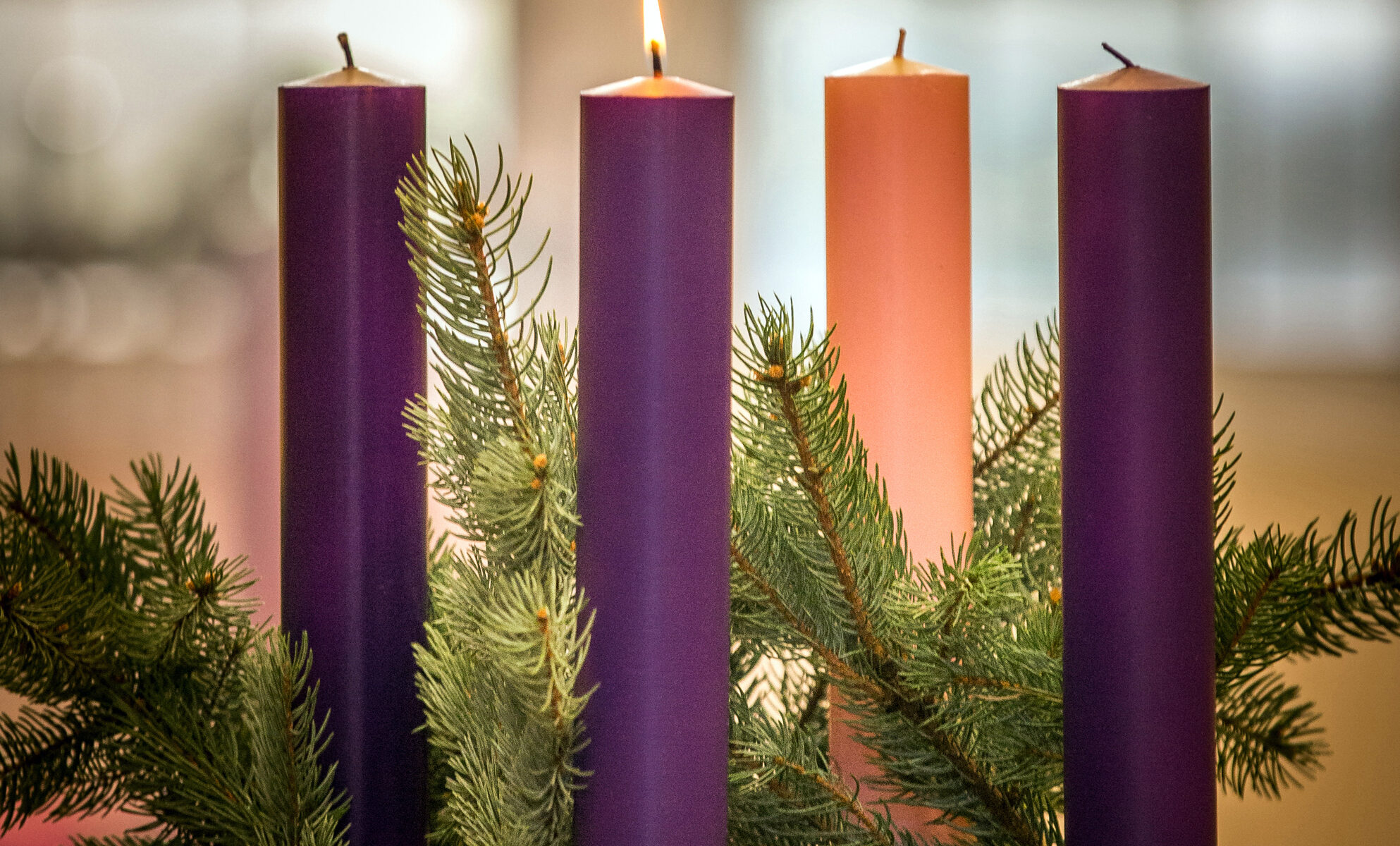
Advent calls us to watchfulness. “Watch therefore,” our Lord commands in the Gospel readings of this season, “for you know neither the day nor the hour” (Matthew 25:13). We are to be like servants awaiting their master’s return, like bridesmaids keeping their lamps trimmed, like the faithful steward who continues his work even when the master delays.
But what exactly are we watching for? And perhaps more importantly, what are we watching in?
The temptation of Advent is to make it only about watching the calendar, about external preparations for Christmas. We watch for the packages to arrive, for the liturgical progression from violet to rose to white, for the carols to begin and the feast to come. All good things, to be sure. But Advent’s deeper call is to watch our own hearts, to examine the interior movements that reveal whether we are truly preparing room for Christ or merely making room for religious sentiment.
This is where the ancient practice of the Examen becomes not just helpful but essential, particularly for those of us navigating the troubled waters of contemporary Anglicanism.
Let me be direct: the Anglican crisis is not just “out there” in the institutions, the bishops, the synods and conventions. The crisis is also “in here,” in our own hearts, in our own motivations, in the hidden springs from which our responses flow.
When we hear of yet another bishop covering up abuse, of another diocese ordaining those who deny the Resurrection, of another abandonment of apostolic faith in favor of cultural accommodation, what rises up within us? Righteous anger rooted in love for Christ’s Church? Or self-righteous anger rooted in our need to be proven right? Grief that stems from genuine love for souls? Or cynicism that hardens into contempt for all institutional Christianity?
These are not easy questions. They require rigorous self-examination to explore our own motivations. In twenty years of ministry, I’ve learned that people rarely do things for the reasons they think they do. Our stated motivations and our actual motivations often diverge widely.
St. John Cassian understood this deeply. His Conferences are essentially a prolonged examination of the logismoi, the thought-patterns and interior movements that either lead us toward God or pull us into vice. Cassian knew that we can be doing the right thing for the wrong reason, and that such misalignment of motivation ultimately corrupts even our good works.
This is the genius of the Examen, it trains us to notice these interior movements, to distinguish consolation from desolation, to discern whether our activism flows from the Spirit of Christ or from our own wounded egos.
The Structure of the Examen
For those unfamiliar with the practice, the Examen consists of five movements, typically practiced twice daily:
First, Gratitude. We begin by recognizing God’s presence and gifts throughout the day. This immediately reorients us away from complaint and toward thanksgiving. It’s harder to maintain cynicism when you’re actively noticing grace.
Second, Petition for Light. We ask God for the grace to see clearly and honestly. This is essential. Without God’s illumination, we will inevitably justify ourselves, explain away our faults, and remain blind to our true motivations. “Search me, O God, and know my heart,” the Psalmist prays. “Try me and know my thoughts, and see if there be any wicked way in me” (Psalm 139:23-24).
Third, Review. This is the heart of the practice. We review the day hour by hour, paying particular attention to the interior movements, what St. Ignatius called consolations and desolations. When did I feel drawn closer to faith, hope, and charity? When did I feel pulled toward fear, bitterness, or self-righteousness? What was I seeking in that conversation, that email, that moment of indignation?
Fourth, Sorrow. Having seen our misalignments clearly, we acknowledge them honestly before God. Not with self-flagellation or despair, but with the simple honesty that makes repentance possible. Perhaps I engaged in gossip disguised as “pastoral concern.” Perhaps I felt secret satisfaction in another’s failure. Perhaps I responded from anxiety rather than faith.
Fifth, Resolution. We turn toward amendment. We choose one specific commitment for the coming day, asking God for grace to keep it. This is where examination becomes formation.
Consider the four vows of our Order: Simplicity, Chastity, Obedience, and Compassion. These provide specific lenses for Advent self-examination.
Simplicity. When I engage with the crisis in Anglicanism, am I driven by genuine poverty of spirit, or by a desire to accumulate influence, allies, vindication? Do I seek the simplicity of the Gospel, or am I caught up in the complexity of ecclesiastical politics? When I write about episcopal failure, speak about institutional corruption, or advocate for reform, from what interior place does this engagement flow?
Chastity, that is, purity of heart. Can I examine my response to a bishop’s theological error or moral failure and honestly discern whether I desire his repentance or his humiliation? Do I pray for those with whom I disagree, or do I secretly hope they’ll be exposed and shamed? This is the most uncomfortable question, but also the most essential. Single-heartedness before God means that even in pursuing justice and truth, our motivation must remain love; love for Christ, love for His Church, even love for the one who has failed.
Obedience. Am I submitted to Christ and His revealed will in Scripture and the historic faith, or have I made my own judgment the final arbiter? Do I obey legitimate authority where it exists, or am I using the failure of some authorities to justify rejecting all authority? There’s a particular temptation here for those of us in the Anglican tradition: having rightly rejected false authorities, we can become so habituated to rejection that we struggle to recognize and submit to true authority anywhere.
Compassion. Do I bear with patience the failings of others as Christ bears with mine? Do I see those with whom I disagree as souls for whom Christ died, or merely as obstacles to overcome? When I encounter theological error, moral failure, institutional corruption, does my heart break with Christ’s grief over Jerusalem, or does it harden with pharisaic contempt?
These are the questions the Examen trains us to ask. Not once, in a moment of spiritual intensity, but twice daily, every day, until the practice rewires our hearts.
A Practice for This Advent
Let me propose something specific. During this Advent season, as we prepare for Christ’s coming, I encourage members of our Order and affiliated parishes to practice what we might call the “Advent Examen of Ecclesial Engagement.”
This could be incorporated into our practice of the Daily Office. It takes only fifteen to twenty minutes, but the cumulative effect over four weeks will be profound.
Gratitude (5 minutes). Begin by thanking God for three specific gifts from the day. Deliberately include at least one related to the Church, however broken it appears. Perhaps a faithful sermon you heard. Perhaps a moment of genuine fellowship. Perhaps a prayer answered. Perhaps simply the grace that you remain in the faith at all, that you have not abandoned ship, that Christ has kept you when others have fallen away. This is not vain optimism, it is training ourselves to see with the eyes of hope rather than the eyes of cynicism.
Petition (2 minutes). Pray the words of Psalm 139 slowly: “Search me, O God, and know my heart. Try me and know my thoughts. And see if there be any wicked way in me, and lead me in the way everlasting.” Ask specifically for insight into your motivations regarding the current challenges facing the Anglican witness. Ask for the grace to see yourself as you truly are, not as you imagine yourself to be.
Review (10 minutes). Go through your day chronologically. Recall every moment when you engaged with the Anglican crisis—whether through reading, conversation, writing, social media, or internal thoughts. For each moment, ask:
– What did I think, say, or do?
– What interior movement preceded this action?
– Was I experiencing consolation (movement toward God) or desolation (movement away from God)?
– What was I actually seeking in this moment?
– Did this engagement draw me closer to Christ-like love, truth, and hope?
Be specific. If you read an article about episcopal misconduct, what were you feeling as you read? Relief that “your side” was vindicated? Genuine grief over souls harmed? Satisfaction that someone was finally being exposed? Anxiety about the Church’s future? Notice the movement, name it, and trace it to its source.
Sorrow (3 minutes). Acknowledge specific misalignments. Perhaps you engaged in gossip under the guise of “keeping people informed.” Perhaps you felt a flash of satisfaction when you heard of an opponent’s failure. Perhaps you responded to someone’s question from impatience rather than charity. Perhaps you allowed fear of institutional collapse to eclipse your trust in Christ’s promise that the gates of hell will not prevail against His Church.
Confess these to God honestly. “Against You, You only, have I sinned, and done what is evil in Your sight” (Psalm 51:4). The goal is not self-condemnation but honest acknowledgment that makes transformation possible.
Resolution (2 minutes). Choose one specific commitment for tomorrow. Make it concrete and achievable. Perhaps: “I will not discuss Bishop X’s situation without first praying for him.” Perhaps: “I will wait twenty-four hours before responding to inflammatory emails.” Perhaps: “I will read one page of Scripture for every page of ecclesial controversy I read.” Perhaps: “When I speak about the crisis, I will first state one thing I’m grateful for in the Church.”
Ask God for grace to keep this commitment. You will likely fail. When you do, bring that failure to the next Examen. The point is not perfection but progressive sanctification—the slow work of the Spirit conforming us to the image of Christ.
The Theological Foundation
Consider: St. Cuthbert himself practiced exactly this kind of rigorous self-examination. The Life of St. Cuthbert records how he would spend entire nights in prayer, standing in the cold North Sea, examining his conscience and battling his inner demons. The Desert Fathers, whom both Cuthbert and Ignatius drew upon, called this nepsis, or watchfulness and vigilance over the heart’s movements.
St. Augustine’s Confessions is nothing less than an extended Examen, mining his past for the movements of grace and sin, examining motivations rather than merely cataloging actions. “Our hearts are restless until they rest in You,” Augustine writes—and that restlessness can manifest as destructive activism in ecclesial politics if it’s not examined and redirected toward its true object.
St. Gregory the Great, in his Pastoral Rule, insists that those who would govern or reform the Church must first govern themselves. Self-examination precedes and enables effective ministry. Without it, even our pursuit of justice becomes unjust, even our defense of truth becomes distorted by pride.
This is thoroughly patristic, thoroughly Anglican, thoroughly compatible with the charism of our Order.
The Integration of Contemplation and Action
The Rule of the Order of Saint Cuthbert calls us to “contemplation in action,” the integration of deep prayer with active ministry that characterized Cuthbert himself. He could not remain on Farne Island when the people needed him, yet he could not minister effectively without his times of withdrawal for prayer and self-examination.
The Examen serves this integration perfectly. It prevents our activism from becoming mere reactivity. It prevents our contemplation from becoming escapism. It ensures that when we engage with ecclesial crisis, we do so from a centered place, from examined motivations, from hearts that have been regularly brought before God for cleansing and realignment.
Without this practice, we risk becoming what we oppose. We risk fighting institutional corruption with our own corruption of spirit. We risk defending apostolic truth with un-apostolic attitudes. We risk pursuing church discipline while remaining undisciplined in our own hearts.
The Goal: Prepared for Right Action
Let me be clear: the goal of this Advent Examen practice is not paralysis through endless self-questioning. The goal is clarity for faithful action.
By examining our motivations daily, we prepare ourselves to respond to Anglican crisis not from our wounds, our anxieties, or our pride, but from the fruit of the Spirit: love, joy, peace, patience, kindness, goodness, faithfulness, gentleness, self-control (Galatians 5:22-23).
We need people who will speak truth in love, who will pursue discipline with humility, who will work for reform as those who know themselves desperately in need of reformation. We need people who can distinguish between righteous anger and self-righteous anger, between holy grief and cynical despair, between hope and presumption.
The Examen trains us to be such people. It doesn’t guarantee we’ll always get it right, but it substantially increases the odds. It creates the interior space for the Spirit to work, convicting us of our mixed motives, revealing our blind spots, redirecting our energies from ego-protection to genuine service.
A Word to the Weary
I know many of you are tired. My years in ministry and counseling have taught me to recognize compassion fatigue, vicarious trauma, and burnout. Many of us who care deeply about Anglican orthodoxy, who’ve fought for years to maintain apostolic faith in hostile institutions, who’ve watched diocese after diocese abandon the truth, many of us are running on fumes.
The Examen is not another burden to add to your load. It’s actually rest for the weary. By bringing our hearts regularly before God for examination, we’re relieved of the exhausting work of self-justification. We’re freed from the crushing weight of always needing to be right. We’re released from the anxiety that our entire identity is wrapped up in ecclesial outcomes beyond our control.
When we practice the Examen faithfully, we discover that God’s grace really is sufficient for our weakness. We discover that Christ really does bear our burdens. We discover that the Spirit really does pray for us with groanings too deep for words when we don’t know what to pray.
And we discover that being faithful is more important than being vindicated, that love is more powerful than correct analysis, and that the One who holds the seven stars in His right hand will not abandon His Church, however dark the present moment appears.
The Advent Invitation
So, this is the invitation for Advent: Watch. Not just the calendar, not just the liturgical progression, not just the external signs of Christ’s coming. Watch your heart.
Watch the movements within you when you read about episcopal failure. Watch what rises up when you encounter theological error. Watch where your thoughts go when you pray for the Church. Watch, and ask God to show you the truth about your own motivations.
This is the work of Advent. This is how we prepare room for Christ, not just in our schedules or our sanctuaries, but in the hidden depths of our hearts where our truest motivations dwell.
“By your endurance you will gain your lives,” Jesus tells us in Luke 21:19. That endurance is not gritted-teeth survival. It’s the patient, persistent work of allowing God to search us and know us, to try us and know our thoughts, to see if there be any wicked way in us, and to lead us in the way everlasting.
May this Advent be for all of us a season of holy watching, of honest self-examination, of hearts prepared not for Christmas sentimentality but for the coming of the King who searches minds and hearts, who sees in secret, and who will reward each according to their deeds.
Come, Lord Jesus. And while we wait, by Your Spirit, prepare us to receive You rightly, in our worship, in our work, and in the examined depths of our hearts.
– Abbot Kenneth